Fresno Winter Storm Flooding Guide: Runoff Management and Emergency Drying Protocols
Atmospheric river storms bring heavy runoff and urban pooling across Fresno. Learn essential flood protection and certified structural drying guidelines.
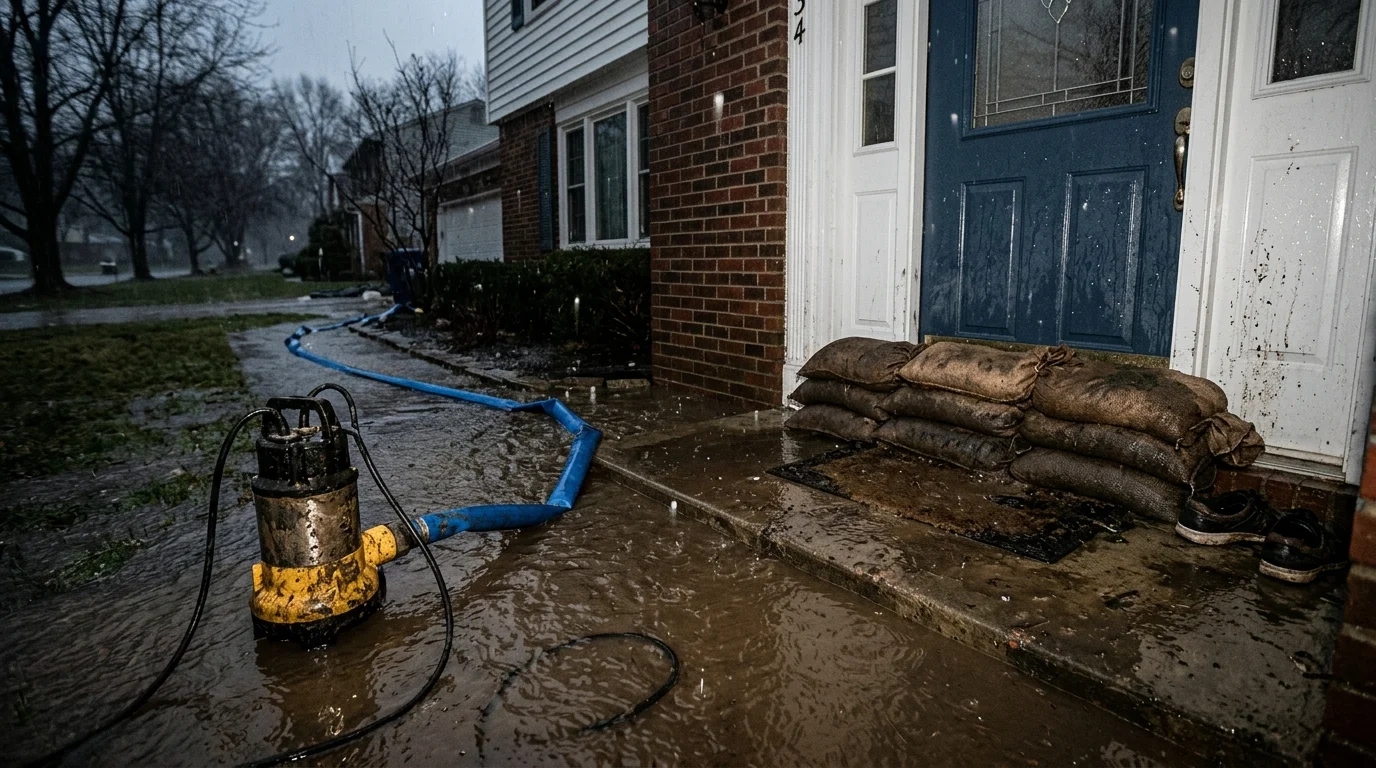
Winter atmospheric rivers deliver concentrated rainfall across the Central Valley, overwhelming municipal drainage basins and pushing exterior stormwater runoff directly against residential Fresno foundations. Because floodwaters carry silt, automotive runoff, and biohazards, rapid physical diversion combined with industrial sanitization is mandatory to protect structural integrity and indoor environmental health.
Understanding Fresno Urban Drainage Dynamics
Unlike desert cities that face sudden flash floods from dry washes, Fresno relies on an extensive network of retention basins engineered by the Fresno Metropolitan Flood Control District. During heavy multi-day atmospheric events, localized street ponding frequently backs up into low-lying driveways, crawlspaces, and residential threshold entries.
Properties across older neighborhoods such as Lowell, Calwa, and West Fresno face unique challenges due to aging curb infrastructures and clay-rich soil horizons that restrict rapid percolation. When exterior surface water breaches ground-level thresholds, the intrusion qualifies as Category 3 black water requiring immediate professional attention.
Homeowners dealing with severe storm intrusion can review comprehensive protocols through our flood damage restoration services to safely address exterior mud, saturated framing, and contaminated drywall.
Step-by-Step Defense Protocol for Winter Rain Deluges
When heavy storm systems are forecasted by the National Weather Service in Hanford, implementing defensive property protections limits flood ingress:
-
Clear Yard Drains and Downspout Terminations: Silt and autumn leaf debris frequently choke corrugated exterior landscape drains. Inspect all collector sumps and ensure downspouts divert water at least six feet away from the perimeter foundation footing.
-
Inspect Sump Pumps and Check Valves: Sump systems in subterranean crawlspaces or below-grade additions must be tested before major storm fronts arrive. Pour water into the basin to confirm mechanical float switches actuate smoothly and discharge pipes remain unobstructed.
-
Install Poly Sandbags Along Vulnerable Entryways: Position sandbag barriers in overlapping rows along low-lying garage portals and side patio doors where street runoff historically pools. Always tuck plastic sheeting underneath bags to create an impermeable water stop.
-
Isolate Contaminated Runoff from Living Spaces: If exterior floodwater enters your home, treat it as biohazardous. Avoid walking through contaminated puddles without protective rubber boots and waterproof gloves.
-
Engage Professional Decontamination Technicians: Stormwater containing biological contaminants requires thorough EPA-registered antimicrobial treatments. If municipal sewer lines back up alongside storm runoff, specialized emergency sewage cleanup units must sanitize affected areas before forced drying begins.
Industrial Structural Drying Versus Surface Airflow
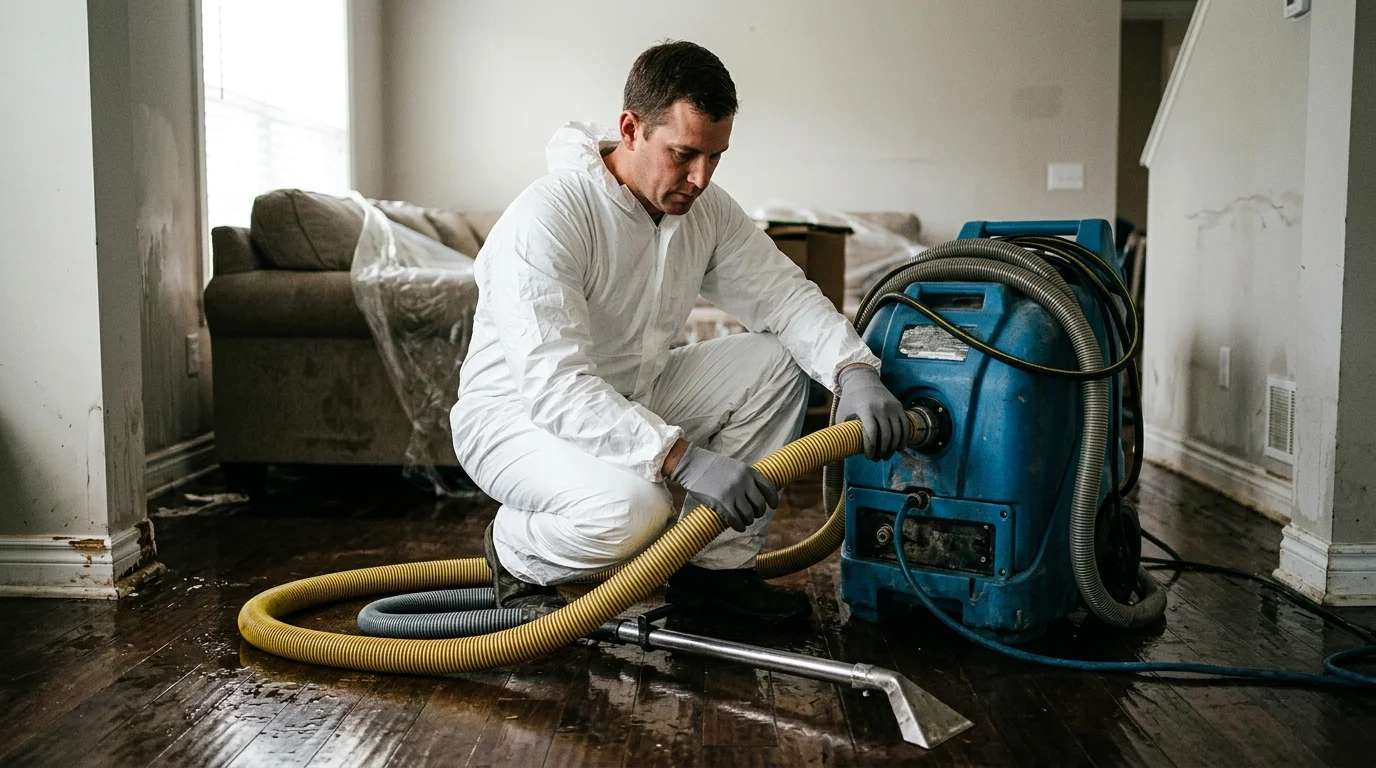
Setting up household box fans after a flood only evaporates surface moisture while driving humidity deeper into structural framing and floor joists. Professional mitigation requires low-grain refrigerant dehumidifiers that pull moisture directly out of saturated timber and plaster.
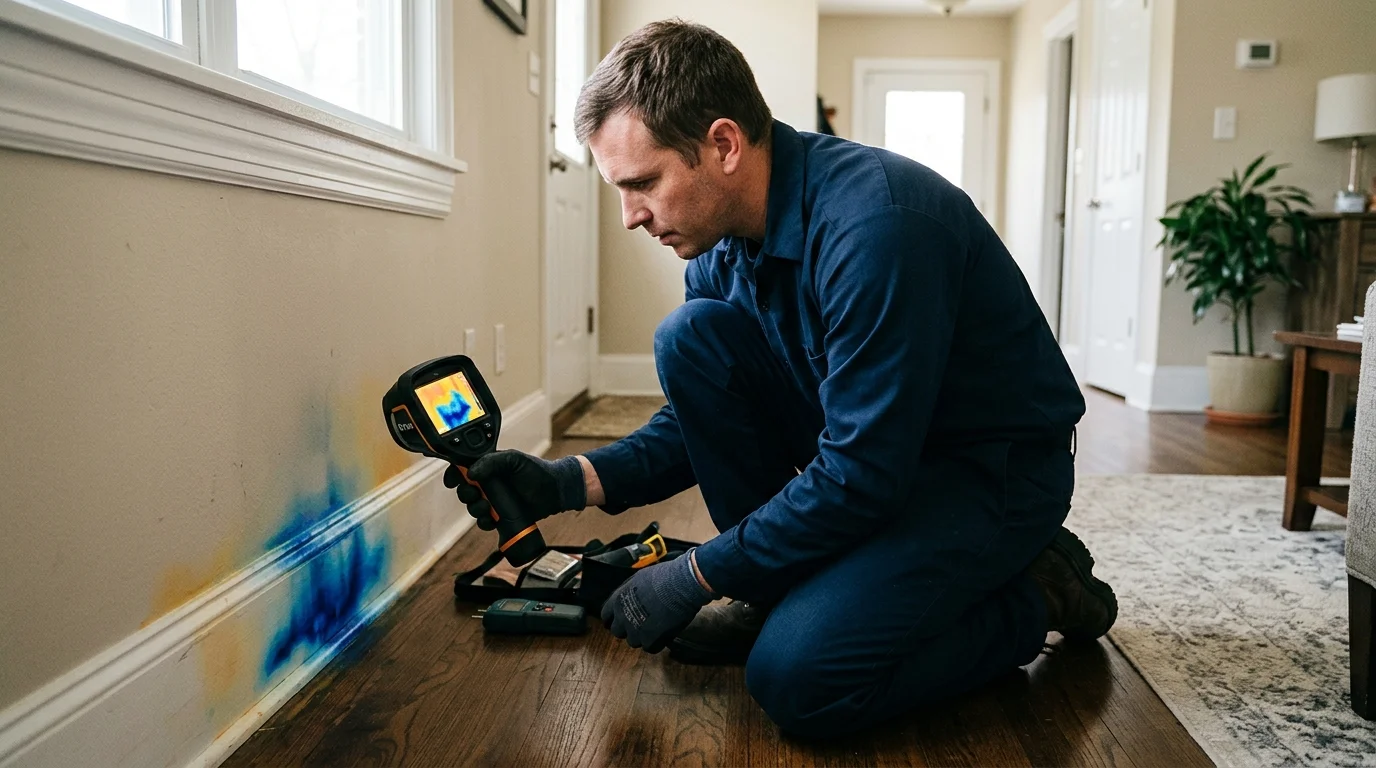
Technicians serving all Fresno neighborhood sectors deploy moisture mapping equipment to verify structural framing reaches target moisture content levels below 15 percent before commencing drywall rebuilds.